
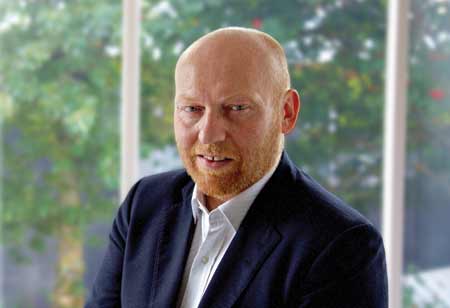
Dr. Tryggvi Þór Herbertsson, Head of Hydrogen Strategy, serves as the chairman of Qair Iceland H2. His vision is to initiate projects with expertise across various fields and to build partnerships in the industry across countries.
In an interview with Energy Tech Review Europe, Herbertsson shared his insights on his professional journey in the renewable resource space and the new developments and challenges within the hydrochemical industry.
A Wide Range of Professional Expertise
My professional journey began as an economics professor. This experience led me to a position as CEO of an investment bank in Iceland, where I worked until the financial crisis. Following that, I served as a special economic advisor to the government of Iceland, overseeing banking challenges during the crisis. Afterward, I was elected to the Icelandic Parliament for a four-year term.
Years of expertise enabled me to take on chairman responsibilities for multiple companies. Currently, I serve as the chairman of Qair Iceland H2 and Head of Hydrogen Strategy at Qair Group.
Expanding Roots Globally
We are positioned as an independent power producer, using wind as a source of energy to generate power at around 1.4 GHz. Our recent project consists of generating 35 GHz of power. The power plants are currently operating in 20 countries, including Brazil, Poland and France. We have been working on different strategies for the production of green electronics. This project will be operated in countries like France, Iceland and Brazil, making it a massive milestone.
Our first large hydrogen project is taking place in France. This achievement will transition us into operating different hydrogen refueling stations in Iceland, including the first commercial hydrogen refueling station in the world.
We focus on developing construction and operational based power plants and hydrogen products through our strategic projects around the world.
Mitigating Challenges Around Renewable Resources
The industry is facing many difficulties. Planning without careful consideration of project execution makes it difficult to keep pace with proliferating technologies. Solid oxide electrolysis (SOEC) is a promising technology and an efficient method to produce hydrogen for ammonia plants. This process can increase efficiency by 20 to 30 percent and reduce the cost of hydrogen, making it a more viable energy source.
“Developing and building renewable projects can be complex. My advice would be to develop a deeper understanding of the industry and start with a well-organized plan to reduce production errors and generate green energy efficiently.”
We focus on renewable energy and staying ahead in the industry by generating green electrons. This allows us to undertake energy transition projects at lower costs, benefiting both our clients and shareholders.
Leading the Green Molecule Sector
My first project was to develop wind farms in Iceland, and today, the company is developing over one GW of wind energy in the country. We are also the largest shareholder of Arctic Hydro, where we produce hydroelectricity from a portfolio of small power plants in Iceland.
My current focus is on the wind-to-hydrogen project, which is a renewable way of generating 840 megavolts of power through ammonia. Our first project is in the steep phase of execution. We conducted an environmental impact assessment by analyzing all the physical and conceptual studies and securing the land for the commencement of the project, leaving the case for the final investment decision. The initiation phase of the final concept will commence shortly, and this project will be a great development for the industry.
The Key to Success in the Renewable Energy Space
Leaders transitioning into the hydrogen sector face multiple challenges. Developing and building renewable and green molecule projects can be complex. My advice would be to develop a deep understanding of the industry and technology and then begin with a well-organized plan to minimize errors. This is the only way to ensure a successful project.