
Be first to read the latest tech news, Industry Leader's Insights, and CIO interviews of medium and large enterprises exclusively from Energy Tech Review
Battery Technology Source
Engineering the Future of Battery Manufacturing
Battery manufacturers across the globe have long been seeking trusted equipment engineering for a reason. They are looking to unlock peak operational efficiency through quality and tailored automation. Battery Technology Source (BTS) has built its identity on this principle, delivering custom-made battery manufacturing equipment marked by modular design, advanced automation and global quality compliance. The real differentiator is in its engineering philosophy. BTS has mastered the art of delivering operational clarity with smarter technologies that are centered on client goals. Manufacturing equipment acts as an intelligent second set of eyes on the production line to monitor and measure in real-time. For clients, the results are transformative. Greater productivity and faster issue resolution are assured and consistent quality output becomes the norm. BTS was established in 2007 in Taichung, Taiwan, by a group of professionals with over two decades of experience in the lead-acid battery sector. From the outset, their mission was to automate battery manufacturing with purpose-built machinery. True to this spirit, the slogan ‘source of innovation’ reflects the company’s enduring philosophy of continuous improvement and customer focus. “These foundational principles have been instrumental in building and maintaining our customer loyalty for the past two decades,” says Alvin Huang, CEO. “Every machine we deliver is designed to meet the specific safety standards of our customers while fulfilling their requirements.”

Top Energy Storage Technology Solution in Apac 2025
For years, lithium has dominated the conversation about clean energy. But as the world pushes for safer, more sustainable, and resilient alternatives, with Europe’s first industry-scale Sodium-Ion battery energy storage system, PHENOGY is well-positioned to redefine the game. The technology leader will alter the future of energy systems by enabling independence in supply and operations through domestic sourcing, manufacturing and big energy data. This comes from PHENOGY’s conviction that energy should be decentralized – across industries, infrastructure, and commerce, and truly integrated – from sourcing to manufacturing to operations. This vision has manifested in its sodium-ion systems, which are built with safety, scalability, cost-efficiency, transparency, and long lifecycle performance. The company offers a credible alternative to lithium-ion batteries with a minimized eco-footprint and maximized supply chain resilience. Sodium-ion chemistry harnesses a naturally abundant, thermally stable element, addressing thermal volatility, one of energy storage’s most critical challenges. PHENOGY systems are fire safe, making them ideal for extreme conditions and mission-critical sites like hospitals, data centers, as well as military and civil infrastructure. Game-changer by design While many technologies disrupt, PHENOGY’s approach is to integrate. Its modular technology platform was designed for interoperability, connecting seamlessly to existing grids and microgrids, with the benefit to avoid costly upgrades, e.g. for EV charging-infrastructure. Its intelligent system management ensures smooth, dependable operation across all applications, including peak shaving, renewable balancing, and backup during grid downtime. PHENOGY’s innovation extends beyond engineering. The company collaborates with leading research institutions and technology partners to keep its systems secure, scalable, and future-ready. Whether supporting public utilities, industrial hubs, or smart cities chasing carbon neutrality and resilience, PHENOGY adapts quickly, proving that collaboration is the fastest route to future-proof energy supply.

Top Oil And Gas AVEVA PI Software in APAC 2025
Into Solutions
Field-Aligned PI Modernization that Protects Operational Continuity
Yong CK, General Manager
Oil and gas field operators rarely have the freedom to halt their operations for system upgrades, which makes operational continuity the primary requirement of any modernization effort. Into Solutions steps into that environment with a partner mindset shaped by real plant conditions and the pressures operators manage every day. The team reinforces the systems crews already trust through a measured, field-aligned approach for plant information (PI) system and supervisory control and data acquisition (SCADA) modernization. Each upgrade is grounded in responsiveness, accountability and fit-for-purpose engineering. Respecting the Installed Base A principle it calls “respecting the installed base” shapes every project. Instead of disrupting established routines, Into Solutions reinforces existing infrastructure and supports safer, clearer decision-making. “Customization is introduced only where it improves operational relevance. Dashboards, alerting strategies and data models are shaped around each plant’s rhythms, reflecting how technicians and engineers make decisions in the field. We ensure technology adapts to operations, not the other way around,” says Yong CK, general manager. Real-world field conditions are converted into structured engineering decisions that withstand operational pressure. Every data flow, control logic sequence and telemetry path is examined for accuracy, latency and relevance, ensuring the PI architecture reflects real plant behavior. This disciplined approach anchors AVEVA PI Server, PI Asset Framework, PI Vision and PI Analytics in trustworthy, timely data, giving operators clearer situational awareness, reducing manual intervention and supporting exception-based intelligence.
Electric Vehicle

Repurposing Resources: Installing New Battery Energy Storage Utilizing Existing Infrastructure
Julian Kaufmann, Executive Vice President, CAMS
Fuel Cell

Navigating the Path to Sustainable Transformation
Julie-Anna Smith, Director Strategy & Growth, Bureau Veritas Group
Waste to Energy

Driving a Water Utility's Climate Action Path
Jose Victor Emmanuel A. De Dios, President and CEO, Manila Water
Solar Energy

Becoming A Net Carbon Zero Water Utility
Charles Agnew, Head of Strategy & Sustainability, Sydney Water
Renewable Energy

Building a Resilient Future through Technology
Mohd Hanapi Bisri, Head of Group ICT, Petra Energy Berhad [KLSE: PENERGY]
IN FOCUS
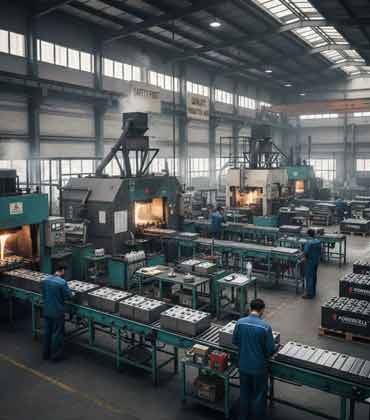
The Relevance of Lead-Acid Batteries in APAC's Energy Landscape
Lead-acid batteries, despite being overshadowed by lithium-ion technology, remain essential in the APAC region for their economic advantages, recyclability, reliability, and role in critical infrastructure.
Asia-Pacific's Energy Storage Renaissance: Powering the Renewable Transition
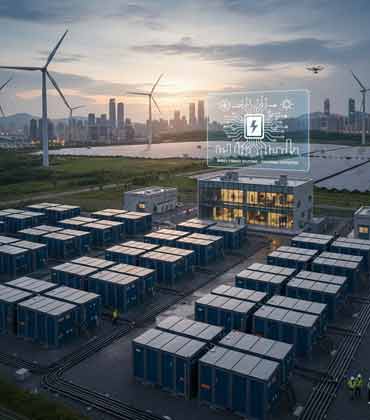
The Asia-Pacific region is rapidly advancing in energy storage, transitioning to reliable, dispatchable renewables that support grid stability and meet net-zero targets amid rising demand for clean energy solutions.
EDITORIAL
Industrial Transformation and Data-Driven Progress across APAC
Across the Asia Pacific, industrial and energy markets are undergoing a pragmatic transformation. Operators are modernizing infrastructure while continuing to rely on proven technologies, balancing capital discipline, operational reliability and growing decarbonization mandates. Rather than wholesale disruption, the region is seeing parallel evolution, where legacy systems coexist with advanced digital platforms to meet near-term performance goals and long-term sustainability targets.
Despite the rapid expansion of lithium-ion technologies, lead-acid batteries remain strategically important across APAC. Demand continues to be anchored in automotive SLI applications, telecom backup power, and industrial stationary systems. Manufacturers are prioritizing incremental innovation, like enhancing cycle life, improving sealed and maintenance-free designs, and investing heavily in recycling infrastructure to comply with tightening environmental regulations.
In oil and gas operations, OSIsoft PI software, now part of the AVEVA portfolio, has evolved into a foundational digital infrastructure. Across upstream and midstream assets in APAC, PI systems are increasingly deployed beyond real-time monitoring to support predictive maintenance, emissions measurement, and asset performance management. This reflects a maturing digital strategy, where data platforms are embedded into core operations to improve uptime, safety, and regulatory compliance, rather than positioned as experimental digital initiatives.
Energy storage brings these threads together as renewable capacity expands rapidly across the region. Grid-scale and hybrid storage deployments are accelerating, with APAC markets adopting a diversified mix of lithium batteries, established storage technologies, and pumped hydro, shaped by grid conditions and policy frameworks. Project developers and utilities are prioritizing bankability, system integration, and long-term reliability amid aggressive pricing pressures and policy targets that are testing commercial viability.
This edition highlights the expert perspectives of Kreecha Puphaiboon, Head of AI/ML at BANPU Public Company Limited[BKK: BANPU], and Zulfa Ashida Zulkifli, Vice President of Human Resources, at Velesto Energy Berhad[KLSE: VELESTO]. These esteemed professionals share their invaluable insights on developments and challenges within the sector, along with potential solutions.
We hope the valuable insights from industry leaders featured in this edition will help you make informed decisions for your businesses.
