

Be first to read the latest tech news, Industry Leader's Insights, and CIO interviews of medium and large enterprises exclusively from Energy Tech Review
![Envision [HKEX: 1783]: Intelligence at the Core of Wind Energy](https://www.energytechreviewapac.com/uploaded_images/Untitled-4-p4vws.jpg "Envision [HKEX: 1783]: Intelligence at the Core of Wind Energy")
Envision [HKEX: 1783]
Intelligence at the Core of Wind Energy
As utilities and independent power producers across APAC look for higher energy yields, greater grid stability and stronger returns over the life of their assets, the ability to make better decisions in real time is becoming increasingly important. AI can help turbines produce more power, reduce downtime, respond to changing weather and grid conditions, and get more value from infrastructure that is already in place. In this environment, the future of wind power depends as much on intelligence as it does on mechanical engineering. Envision [HKEX: 1783] has put this idea at the center of how it designs, operates and optimizes turbines, bringing AI and physical engineering together across the asset lifecycle rather than treating software as an add-on. Engineering Every Decision Envision’s approach starts with what it calls Physical AI: combining engineering models, real-world operating data and reinforcement learning so turbines can sense changing conditions, learn from experience and continuously improve their performance. Digital twins are a key part of this approach. According to the company, more than 20 petabytes of operating data and more than 100 engineering, simulation and operational models contribute to digital representations of turbines and their individual components. These models can help anticipate performance issues, identify anomalies and support predictive maintenance before failures affect production.
![Envision [HKEX: 1783]: Intelligence at the Core of Wind Energy](https://www.energytechreviewapac.com/newstransfer/upload/Non-Hazardous_Fuel_Solution_APAC-7iy50-.jpg "Envision [HKEX: 1783]: Intelligence at the Core of Wind Energy")
Oil and Gas
Shipping operators know the number. Ships use between 20,000 and 200,000 litres of fuel per day. Every liter of wasted fuel shows up in operating costs, emissions and CII ratings that determine what operators pay at port. Most of the industry has responded by raising the use of cetane or octane levels to produce a stronger combustion event. “Unlike technologies that seek to alter fuel characteristics, AFC focuses on fuel conditioning, water management, fuel system cleanliness and combustion optimization,” says Stuart Martin, director of AddFuel, an Australian manufacturer of environmentally friendly fuel enhancement solutions. AddFuel developed AFC around a different ideology—leave the fuel alone and focus on the engine..

RENEWABLE ENERGY SOLUTIONS
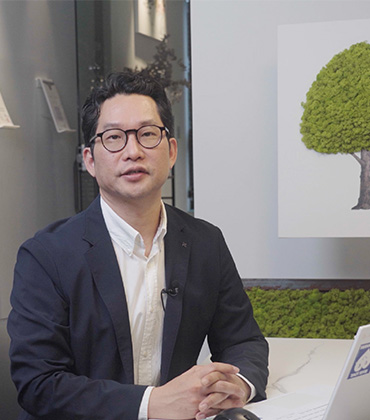
Every meaningful shift toward a cleaner future begins with responsibility. It is the kind that drives industries, governments, and communities to act with purpose. Similarly, Korea Energy Trade was founded on this belief, embracing the notion that sustainable energy is not just an option but the foundation for a better tomorrow. Despite its short history, the company’s leadership draws on decades of proven expertise in the energy sector. This blend of fresh vision and seasoned experience enables Korea Energy Trade to bridge the gap between ambition and execution, delivering forward-thinking strategies anchored in real-world industry insight. Its mission rests on two core pillars. The B2R platform is a first-of-its-kind digital bridge connecting businesses directly with renewable energy providers, simplifying clean power adoption. The second is the R business, which develops and supplies eco-friendly electricity through advanced power generation projects. Together, they turn sustainability commitments into measurable, impactful results. From Samsung Group to mid-sized automotive, electronics, and heavy industry manufacturers, Korea Energy Trade is recognized for its partnership-driven approach, listening first, and then tailoring solutions that align environmental responsibility with business growth. “Our vision is to help high-energy-consuming businesses, rather than households or shops, transition to renewable energy,” says Yusang Kim, Managing Director, Korea Energy Trade. Turning Clean Energy Goals into Lasting Impact Through its innovative B2R platform, Korea Energy Trade streamlines access to vetted power generation projects, delivering scalable solutions like power purchase agreements (PPAs), rooftop solar leasing, and green investment opportunities. Another key differentiator lies in its relationships. The company recognizes that the shift to 100 percent renewable energy is not a single event but an ongoing journey that demands commitment, expertise, and adaptability. Korea Energy Trade offers continuous advisory services to support clients on this journey, ensuring organizations can confidently navigate evolving energy systems and regulatory landscapes. This role is vital for small and medium-sized enterprises (SMEs), where limited resources and the absence of specialized teams hinder sustainable energy adoption. Acting as an outsourced energy transition partner, it makes the process both manageable and impactful, removing barriers that prevent SMEs from embracing renewable solutions.
BATTERY MATERIAL SOLUTIONS
Nogamigiken
Engineering Precision for Next-Generation Batteries
Ryota Nogami, Representative Director
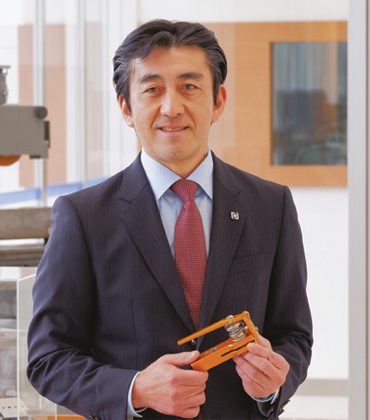
Every breakthrough battery starts with the right tools, and Nogamigiken has become the precision tool manufacturer that makes such innovation possible. Since its founding in 1970, the company has refined machining and measurement technologies under its guiding principle of Management of Technology, using core expertise to deliver solutions that create lasting value. “We carefully listen to both explicit and latent customer needs to propose optimal products and services,” says Ryota Nogami, representative director. This customer-focused approach ensures that Nogamigiken drives enduring client relationships while advancing battery development. Its portfolio spans ultra-sharp cutting blades, precision gauges, long-life dies, and specialized punching systems designed to meet the demanding requirements of secondary battery development. These tools feature innovations such as adhesion-resistant cutting for aluminum-based cathodes, ultra-narrow clearances down to two μm, and selectable clearance options that help minimize burrs and delamination. Unlike others that cause the active layer to collapse or peel, Nogamigiken’s handheld punches prevent damage, preserving sample integrity for accurate mass and density measurements. By combining deep technical mastery with a commitment to customer-driven innovation, Nogamigiken has become a trusted partner to automotive leaders, battery producers, universities, and research institutions across Japan, Europe, and North America. Innovative Tools for Next-Generation Batteries Since the 1990s, Nogamigiken has expanded into press die design and mass production, creating ultra-precise, long-life components. In 2000, it launched a dedicated solutions business to address explicit and latent customer needs, providing tailored products and technical support. By 2008, the company had entered the battery development field, helping manufacturers and researchers tackle the challenges of processing delicate electrode materials.
Power Generation Solutions

Harness the energy of Asian Nearshore wind
Min Yang, Deputy APAC Technology Director, Siemens Gamesa
Renewable Energy

Transforming Telecommunications through Emerging Technologies
Enoch Charles, Information Technology - Smart Grid Transport Manager, CenterPoint Energy
Battery Tech

The Key To Reducing Fuel Consumption And Reduced Environmental Footprint
Frode Jensen, President Rig Technologies, National Oilwell Varco [NYSE: NOV]
Renewable Energy

Building Reliability through Energy Diversification
Jason Ho, VP, Technology, ColdStream Energy, LLC
Energy Solution

Rewiring the Energy Workforce With Immersive Tech
Jenny Taylor, Lead of Digital Transformation and Innovation in XR/VR, Duke Energy Corporation

IN MY OPINION
Power Generation Solutions
Building Digital Discipline in the Power Sector
Dalen Copeland, CIO, EDF Power Solutions North America

LAST WORD
Energy AI
Scaling AI across the Energy Enterprise
Iddo Salton, VP Innovation, Data & AI, Delek US
IN FOCUS
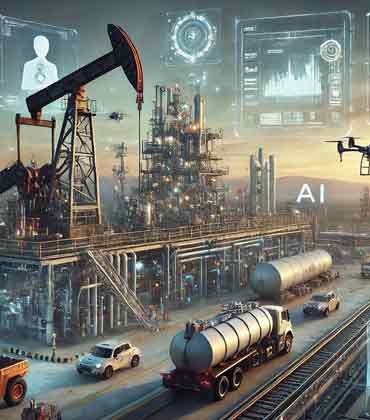
APAC Energy Systems: Non-Hazardous Fuel Additive Advancements
Non-hazardous fuel additive solutions in APAC enhance fuel efficiency, reduce emissions impact, improve engine performance, and support safer, regulation-aligned fuel systems.

Investing in Sustainability: The APAC Cellulosic Ethanol Sector Unleashed
APAC cellulosic ethanol developers are advancing efficiency, scalability, and investment readiness through technology and strategic partnerships.
EDITORIAL
Practical Innovation for a More Efficient Energy Future
Improving energy performance today depends on solutions that deliver measurable operational results while supporting efficiency, reliability and lower emissions. This edition of Energy Tech Review APAC explores how organizations are dealing with these priorities through practical technologies, disciplined execution and leadership grounded in measurable business outcomes.
Our featured company, AddFuel, recognized as the Top NonHazardous Fuel Solution in APAC 2026, demonstrates how meaningful innovation often comes from improving existing systems rather than replacing them. Its AFC fuel conditioning technology enhances combustion performance by managing water contamination, improving fuel system cleanliness and optimizing engine operation without altering fuel specifications or requiring equipment modifications. Independent validation and successful deployments across marine, mining, power generation and industrial operations have demonstrated measurable reductions in fuel consumption, emissions and maintenance demands, reinforcing AddFuel’s commitment to commercially proven solutions that improve operational performance.
Dalen Copeland, CIO, EDF Power Solutions North America, explains that digital investments create value only when they are evaluated with commercial discipline, trusted data and a clear understanding of competitive priorities. He emphasizes that technology should strengthen business outcomes through governance, transparency and continuous improvement rather than follow technology trends alone.
Iddo Salton, VP Innovation, Data & AI at Delek US, shares his experience on how artificial intelligence generates long-term benefits when companies re-engineer their processes based on their business needs rather than just technology experiments. He emphasizes that for a successful implementation, scalable execution and alignment with the right leadership are required.
These viewpoints together illustrate that genuine success in the energy industry lies in actual innovation, responsible leadership, and effective implementation. We invite you to review the stories in this edition and learn how companies from throughout the industry are converting concepts into practice.
