
Be first to read the latest tech news, Industry Leader's Insights, and CIO interviews of medium and large enterprises exclusively from Energy Tech Review
SwitchDin
Making Distributed Energy Predictable at Scale
SwitchDin operates where grid ambition meets physical reality. As solar, batteries, EV chargers and flexible loads proliferate behind the meter, utility companies and large energy users face a crucial question: How can they see, control and optimize assets they do not own without fragmenting operations or compromising security? SwitchDin provides the software and control infrastructure that enable distributed energy resources (DER) to operate as part of coordinated grid and site operations. Its platform integrates DER into grid operations through a standards-based approach that reduces vendor lock-in and integration friction. Instead of paying for OEM-specific connections that deliver limited insight, SwitchDin enables secure, direct communication between networks and on-site energy assets. This end-to-end connectivity model begins before any device is connected. “In Australia, this model reshaped how DERs connect to the grid. Open protocols supported across inverter manufacturers now give distribution networks real-time visibility into site-level energy flows and the ability to respond when voltage, thermal or minimum-load constraints emerge on low-voltage networks,” says Tim Schier, CTO. That foundation extends beyond visibility into orchestration and optimization. SwitchDin enables utilities, network operators and commercial-industrial sites to manage diverse assets as a coordinated fleet. Solar, storage, EV charging and flexible loads respond to grid conditions and business objectives in real time. Customers reduce energy costs, unlock new revenue and maintain stability as renewable penetration accelerates. SwitchDin’s role is to transform complex, distributed infrastructure into a controllable, interoperable system that works for both grids and energy users.

Lead-Acid Battery Manufacturing Equipment Supplier
Battery manufacturers across the globe have long been seeking trusted equipment engineering for a reason. They are looking to unlock peak operational efficiency through quality and tailored automation. Battery Technology Source (BTS) has built its identity on this principle, delivering custom-made battery manufacturing equipment marked by modular design, advanced automation and global quality compliance. The real differentiator is in its engineering philosophy. BTS has mastered the art of delivering operational clarity with smarter technologies that are centered on client goals. Manufacturing equipment acts as an intelligent second set of eyes on the production line to monitor and measure in real-time. For clients, the results are transformative. Greater productivity and faster issue resolution are assured and consistent quality output becomes the norm. BTS was established in 2007 in Taichung, Taiwan, by a group of professionals with over two decades of experience in the lead-acid battery sector. From the outset, their mission was to automate battery manufacturing with purpose-built machinery. True to this spirit, the slogan ‘source of innovation’ reflects the company’s enduring philosophy of continuous improvement and customer focus. “These foundational principles have been instrumental in building and maintaining our customer loyalty for the past two decades,” says Alvin Huang, CEO. “Every machine we deliver is designed to meet the specific safety standards of our customers while fulfilling their requirements.”

Oil & Gas Telemetry System
Into Solutions
Field-Aligned PI Modernization that Protects Operational Continuity
Yong CK, General Manager
Oil and gas field operators rarely have the freedom to halt their operations for system upgrades, which makes operational continuity the primary requirement of any modernization effort. Into Solutions steps into that environment with a partner mindset shaped by real plant conditions and the pressures operators manage every day. The team reinforces the systems crews already trust through a measured, field-aligned approach for plant information (PI) system and supervisory control and data acquisition (SCADA) modernization. Each upgrade is grounded in responsiveness, accountability and fit-for-purpose engineering. Respecting the Installed Base A principle it calls “respecting the installed base” shapes every project. Instead of disrupting established routines, Into Solutions reinforces existing infrastructure and supports safer, clearer decision-making. “Customization is introduced only where it improves operational relevance. Dashboards, alerting strategies and data models are shaped around each plant’s rhythms, reflecting how technicians and engineers make decisions in the field. We ensure technology adapts to operations, not the other way around,” says Yong CK, general manager. Real-world field conditions are converted into structured engineering decisions that withstand operational pressure. Every data flow, control logic sequence and telemetry path is examined for accuracy, latency and relevance, ensuring the PI architecture reflects real plant behavior. This disciplined approach anchors AVEVA PI Server, PI Asset Framework, PI Vision and PI Analytics in trustworthy, timely data, giving operators clearer situational awareness, reducing manual intervention and supporting exception-based intelligence.
Power Plant Tech

Production of Biogas and Biodiesel From Organic and Commercial By Products
Marjun Manahan, Operations Technology Head, Manila Water[OTCMKTS: MWTCF]
Energy Tech

Innovations Driving the Sustainable Energy Revolution
Energy Solution

Watercare's Journey Towards Sustainability: Harnessing Solar Energy
Damien Dupont, Project Manager - Renewable Energy Strategy & Planning, Watercare Services
Oil and Gas Extraction

Modernizing Oilfield Operations with Embedded IT and AI
Pedro Buhigas, CIO, Kodiak Gas Services[NYSE: KGS]
Energy Solution

Pacing Along the Energy Evolution
Julian Kaufmann, Executive Vice President, CAMS
IN MY OPINION
Energy Solution
Elevating Your Compliance-Based EHS Programs to Risk-Based EHS Programs
Ergin Akbaş, Senior Manager - EHS Management Systems, AVANGRID [NYSE: AGR]

LAST WORD
Power Generation Solutions
Harness the energy of Asian Nearshore wind
Min Yang, Deputy APAC Technology Director, Siemens Gamesa
IN FOCUS

Transforming Energy Management in APAC with Distributed Energy Optimisation Platforms
Energy asset software enables utilities and microgrids to integrate renewables, improve efficiency, enhance resilience, and unlock energy value.

Advantages of Distributed Energy Asset Optimisation Software in APAC
Distributed energy asset optimization software improves efficiency, grid stability, renewable integration, cost control, and energy resilience across APAC’s diverse power markets.
EDITORIAL
Building Scalable Energy Systems Across APAC
The energy transition across the APAC region is entering a phase defined by expansion and operational discipline. Renewable generation, distributed resources and new infrastructure models are reshaping how energy systems function. As these assets multiply across networks, the industry’s focus is shifting from deployment to coordination. This edition of Energy Tech Review APAC examines how organizations are addressing this operational shift through technology, engineering discipline and systems thinking.
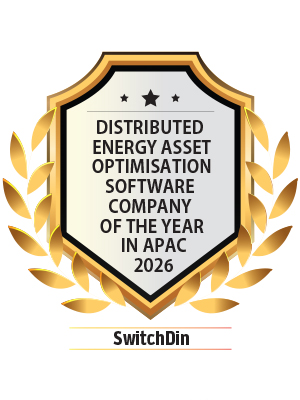
Our cover story recognizes SwitchDin as Distributed Energy Asset Optimisation Software Company of the Year in APAC 2026, for its role in enabling utilities and energy users to connect, control and optimize distributed energy resources. The company’s platform integrates solar, storage, EV charging and flexible loads into coordinated operations through secure connectivity and standards-based interoperability. By establishing control at the connection point and enabling real-time coordination across assets, SwitchDin transforms distributed resources into predictable components of grid operations, helping networks maintain stability as renewable penetration increases.
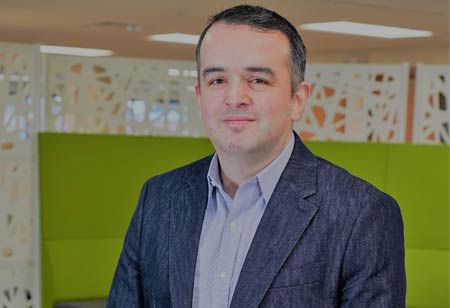
This edition also features leadership perspectives from industry experts examining operational challenges within the energy sector. Ergin Akbaş, Senior Manager - EHS Management Systems at AVANGRID [NYSE: AGR], discusses the importance of moving beyond compliance toward risk-based environmental health and safety management systems, emphasizing structured frameworks that identify and mitigate risks across organizational operations.
Min Yang, Head of Onshore AP EN at Siemens Gamesa, explores the growing potential of nearshore wind development across Asia, outlining the engineering adaptations required to deploy turbines effectively in shallow marine environments while optimizing construction and operational costs.
Together, the perspectives in this issue illustrate a common theme: the energy transition is as much about operational maturity as technological advancement. Distributed systems must be controllable, infrastructure must be engineered for specific environments, and organizations must embed risk awareness into daily operations.
We invite our readers to explore the insights in this edition and engage with the ideas shaping the next phase of energy innovation across APAC.
