

Be first to read the latest tech news, Industry Leader's Insights, and CIO interviews of medium and large enterprises exclusively from Energy Tech Review
Pedro Buhigas, CIO at Kodiak Gas Services, oversees all digital initiatives across the enterprise, from operational technology at the edge to core back-office systems. He is leading a company-wide ERP transformation aimed at replacing legacy platforms with a modern, integrated solution, while also advancing AI-driven innovations to optimize field operations. He began his career in software development at Microsoft, where he built a solid foundation in technology and problem-solving. In 2005, he made a pivotal move into the oil and gas services sector, joining Stallion Oilfield Services. What started as a shift in industry soon became a defining chapter of his career. Over the next 11 years, Buhigas rose through the ranks to become CIO, gaining hands-on experience and leadership insight across business systems, ERP implementations, cloud technologies and IT infrastructure. Through this article, Buhigas emphasizes that technology in industrial environments must always serve operational value, not just innovation for its own sake. At Kodiak, he ensures IT is deeply integrated with field operations, using tools like AI, IoT and automation to drive smarter decisions, improve safety and lower costs.

Top Energy Consumption Analysis and Management Solution in Canada 2026
Energy consumption isn’t just a utility cost for small and medium manufacturers. It is a key indicator of operational performance. Yet facilities with limited resources, frequent equipment disruptions, shifting production demands, and overlapping variables often struggle to interpret energy performance daily. This is mainly because it is difficult to determine what “normal” looks like as operating conditions continually change. Without advanced systems or on-site expertise, tracking efficiency across such dynamic operations remains elusive. Bull’s Eye Modeling turns that complexity into clarity with practical, web-based energy management software designed for resource-constrained manufacturers. The software integrates facility configurations, production data, and operational events into a dynamic baseline that accounts for operational, environmental, and meteorological variables. It delivers actionable insights, normalizes shifting conditions, reduces manual analysis, and provides a precise reference for tracking energy use. “Our software delivers a manufacturing-friendly analytical companion that helps facilities distinguish normal from abnormal energy patterns and provides a clear view of their status,” says Guillaume Matte-Deschenes, president. When abnormal patterns appear, the software highlights them and guides users toward the appropriate corrective actions. This gives facility managers a level of control that would otherwise be difficult to achieve, especially without dedicated on-site experts. Users can log into a centralized portal to configure facility details, set operational parameters, and account for breakdowns or additional shifts. By recording these events within the model, legitimate operational changes are contextualized so they are not misinterpreted. Over time, the software builds a growing knowledge base that helps facilities understand the actual impact of specific events and decisions. Alongside this, its long-term reporting, measured against a normalized baseline, empowers organizations to make confident, data-driven decisions for future implementation of energy efficiency measures and operational investments..

EV Infrastructure Services

British Columbia is embracing the electric vehicle (EV) revolution with open arms. As of October 2023, the province has 129,500 registered light-duty EVs. That’s nearly 21 percent of the total light-duty passenger vehicles, the highest among all provinces and territories in Canada. While the growth is impressive, ensuring the EV charging infrastructure aligns with the increasing number of EVs remains vital. Recognizing this imperative to optimize the charging infrastructure, TDR Electric has positioned itself as a leading player in EV charging services, offering clients a one-stop solution for their evolving needs in the dynamic EV sector. By combining its expertise in electrical solutions with specialized knowledge in EV charging infrastructure, TDR Electric provides tailored, end-to-end solutions that ensure seamless integration, optimal performance and long-term reliability. “Our foremost commitment is client education. We empower them to embrace electric transportation confidently, knowing they have a trusted partner to support their needs every step of the way,” says Taylor Ross, Principal and CEO, Business Development. This is particularly crucial given the rapid growth in EV charging companies entering the market. The range of choices, from the specifications of charging equipment to considerations like power delivery, scalability and operating expenses, can be complex. Adding to this are claims of many solutions being cost-effective or offering environmental benefits, which may not always align with reality. TDR Electric tackles these challenges head-on by capitalizing on its team’s expertise and industry knowledge in EV charging infrastructure. With years of hands-on experience and a profound understanding of the evolving technology, the team excels in evaluating client needs and offering tailored solutions that prioritize efficiency, reliability and sustainability. From assisting clients in procuring top-tier charging equipment to navigating complex permitting and compliance requirements, TDR Electric provides comprehensive support throughout the process.
Smart Industrial Heating Solutions
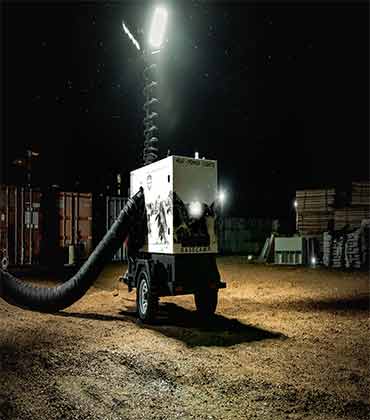
Think about it—30 years ago, how we built vehicles and communicated was revolutionized. Yet, when it comes to industrial heating, we’re still relying on outdated, inefficient technologies. It’s the same old story—bulky, fuel-guzzling machines that are more of a headache than a solution. They break down at the worst times, require constant maintenance, and drain resources like there’s no tomorrow. Workers in frigid conditions are left battling the cold and the inefficiencies of outdated technology. No telematics—just an old-school, labor-intensive method that keeps everyone on edge, waiting for the next failure. Imagine a future where industrial heating is as advanced as our vehicles and communication systems. But what if there were a smarter, cleaner, and more efficient way? Thermal Intelligence is an industrial heater manufacturing company that has developed a clean, cost-effective, and powerful alternative—BASECAMP. A multiple award-winning product, the BASECAMP is an ultra-energy-efficient flameless heater, light tower, and generator that outperforms traditional heaters in every measurable way. It facilitates a cleaner, safer, and greener work environment, making it an ideal solution for construction sites, mining operations, and other cold-weather industrial applications. Its superior efficiency allows a single unit to replace (2) conventional heaters, (1.5) light towers and (1) 25kW generator. “We’ve adapted the best technologies—high-efficiency engines, low-maintenance heat generation, and wireless communication—and engineered them into the most reliable, efficient, and versatile heating equipment for any job site,” says Patrick Bueckert, VP of Sales at Thermal Intelligence. Smart Heating for Smarter Worksites Traditional heaters present significant challenges due to their high energy consumption and inefficiency. A substantial portion of the fossil fuels they rely on is wasted, with nearly 50% of the British Thermal Units (BTUs) consumed being lost as waste heat in the atmosphere rather than being converted into usable heat. This inefficiency results in excessive energy waste and contributes to a greater environmental impact and sky-high fuel bills. In contrast, the BASECAMP heater redefines industry standards by offering market-leading efficiency. It maximizes fuel utilization, converting 97% of diesel fuel into direct, usable heat, which helps minimize waste and optimize performance compared to the industry average of 50%. As the lowest-cost-per-BTU heater available in North America, the BASECAMP stands out due to its innovative electric platform. Designed for superior performance, the unit features high static pressure, allowing it to push air farther, faster, and at higher temperatures than traditional heaters, which currently make up 95% of the heating market. While delivering this enhanced capability, the BASECAMP consumes 60% less diesel, saving users $10,000 per month in fuel costs and reducing emissions by the same percentage. This combination of cost savings and environmental responsibility makes the BASECAMP a standout choice for customers, who will see a 15 - 30% reduction in overall heating expenses.
CXO INSIGHTS

Electrifying Change: Steering Urban Fleets Toward Sustainability
Alexandre Lalonde, Global eMobility Strategy Lead, Hitachi Energy [TYO: 6501]
Transforming the Green Tech Industry With Low Carbon Energy
M. Douglas Dagan, Senior Vice President - Renewable Energy, Suburban Propane

Strategic Initiatives for a Cleaner Energy Future
Ivon Louis-Letang, Energy Manager, Eversource Energy

Achieving Operational Excellence Through Organizational Effectiveness
Earl Berry, Vice President of Engineering, Southern Nuclear [NYSE: SO]

Advancing Hydrogen Innovation for a Sustainable Future
Samuel McDermott, Technical Manager Customer Innovation Solutions, Enbridge Gas


IN FOCUS

Trends Shaping Energy Consumption Management Solutions In Canada
Energy management in Canada is evolving with technology, government policies, and sustainability goals driving the trend toward more efficient solutions.

Decoding Energy Consumption: Canada's Transition to a Low-Carbon Economy
Advanced energy analytics and management solutions improve efficiency, reduce emissions, and support a resilient low-carbon energy system
EDITORIAL
Advancing Intelligent Energy Management and Grid Innovation
Our profile feature recognizes Bull’s Eye Modeling as the Top Energy Consumption Analysis and Management Solution in Canada 2026 for delivering manufacturing focused, web based software that transforms operational variability into measurable insight. Designed for small and medium manufacturers, the platform integrates facility configurations, production intensity, climate impact, and operational events into a dynamic baseline that distinguishes normal from abnormal energy patterns. By contextualizing breakdowns, shift changes, and process fluctuations, Bull’s Eye reduces manual analysis and provides actionable guidance. In one agrifood application, this modeling approach supported refrigeration system upgrades that delivered a 15 percent reduction in total energy consumption, reaching the upper range of typical efficiency gains. With a growing footprint in Ontario and Quebec and planned expansion across Canada, the company is strengthening its analytics platform and preparing to integrate greenhouse gas reporting to align energy management with broader sustainability objectives.
Leadership perspectives in this edition reinforce the operational and infrastructure shift underway. Ivon Louis-Letang, Energy Efficiency Program Manager at Eversource Energy, outlines strategic initiatives centered on heat pumps, cleaner refrigerants, EV incentives, and emerging technologies such as magnetic refrigeration, while emphasizing the role of incentives and continuous adaptation in accelerating electrification. Enoch Charles, Information Technology – Smart Grid Transport Manager at CenterPoint, highlights how AI driven, self healing networks, edge computing, and predictive capacity planning are positioning telecommunications as the intelligent backbone of modern energy systems.
Together, these insights underscore a common imperative: data driven control, adaptive infrastructure, and disciplined execution are central to the future of energy management. We invite readers to explore this issue and examine how precision analytics and intelligent networks are advancing the next phase of energy performance and sustainability.

